HackThisSite - Basic Level 10 - Cookie Manipulation

This time, Sam went for a more temporary and “hidden” approach for user authentication. Unfortunately for him, he forgot one small detail: users weren’t just clicking buttons, they actually knew their way around JavaScript.
When you land on this challenge, you’re greeted with a very simple login form:
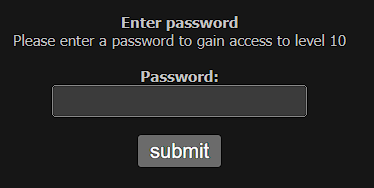
After spending some time poking around the page’s source code, you find nothing. No comments, no hints, no suspicious JavaScript, absolutely nothing useful. At first glance, it looks like a dead end.
However, in the description of this challenge you already have a clue: “something is hidden in the page and is being used for authentication”.
From a client-side perspective, the usual suspects that immediately come to my mind are: cookies 🍪 and tokens 🔑.
This Google resource explains how to inspect and manage cookies using Chrome DevTools, worth a quick look if you’re not familiar with it.
With this information in hand, you head straight to the browser’s cookie storage, and sure enough, what you’ll find is… interesting:
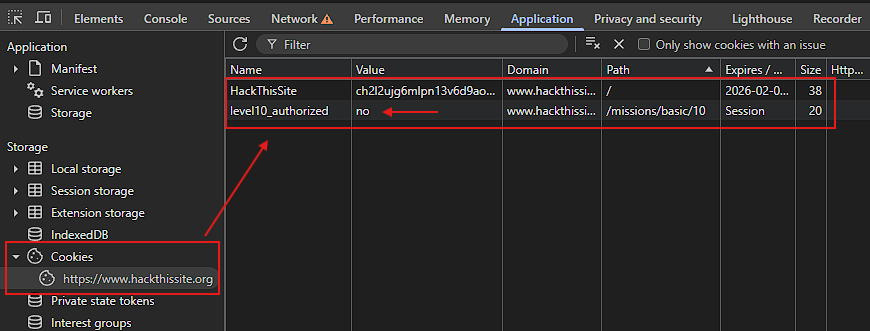
One line immediately stands out:
1
level10_authorized=no
That raises a very important question: Is the web server trusting this cookie to determine whether a user is authorized, without requiring a password?. Well, there’s only one way to find that out. Change the value to:
1
level10_authorized=yes
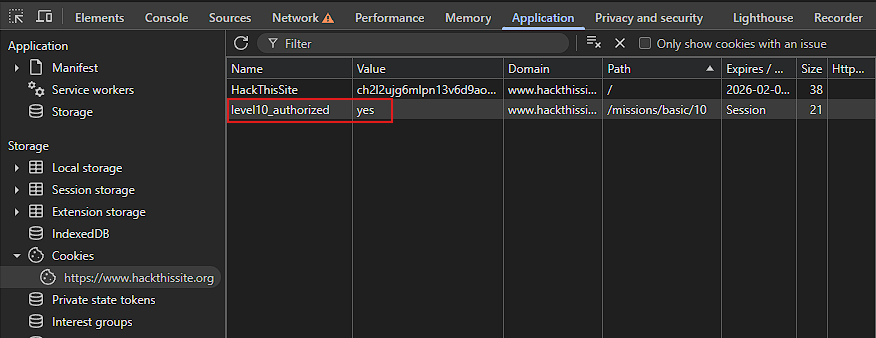
Now submit the form (use a random password, or don’t enter one at all). The result?:

Access granted. 🎉
And just like that, you’re in. Well done, Sam trusted the client, and the client lied.
Security Recommendations
Authentication and authorization decisions should never be trusted to the client side, as cookies, local storage, and JavaScript values can be easily modified by an attacker. All access control logic must be enforced server-side.
Sensitive cookies should be marked with appropriate attributes such as HttpOnly, Secure, and SameSite to reduce the risk of client-side manipulation and cross-site attacks.
Implementing proper session management, token signing (like HMAC or JWT with verification), and regular security testing can significantly reduce the risk of authentication bypass vulnerabilities.