HackThisSite - Basic Level 1 - Hardcoded Password Vulnerability

When performing web application penetration testing, one of the first and most effective steps is to inspect the page’s source code. Developers sometimes leave behind comments that can expose sensitive information, such as credentials, internal logic, or debugging notes.
Browser DevTools are a powerful resource for this task. They allow you to see what’s happening behind the scenes, and in many cases, even modify web page behavior. Refer to this link and choose the DevTools instructions that match your web browser.
In this challenge, you’re presented with a login page that requires a password, so this is an excellent opportunity to put in practice the technique described above. Take your time to view the page source and inspect the web elements carefully.
You’ll realize that the password is hardcoded in the HTML source as a comment:
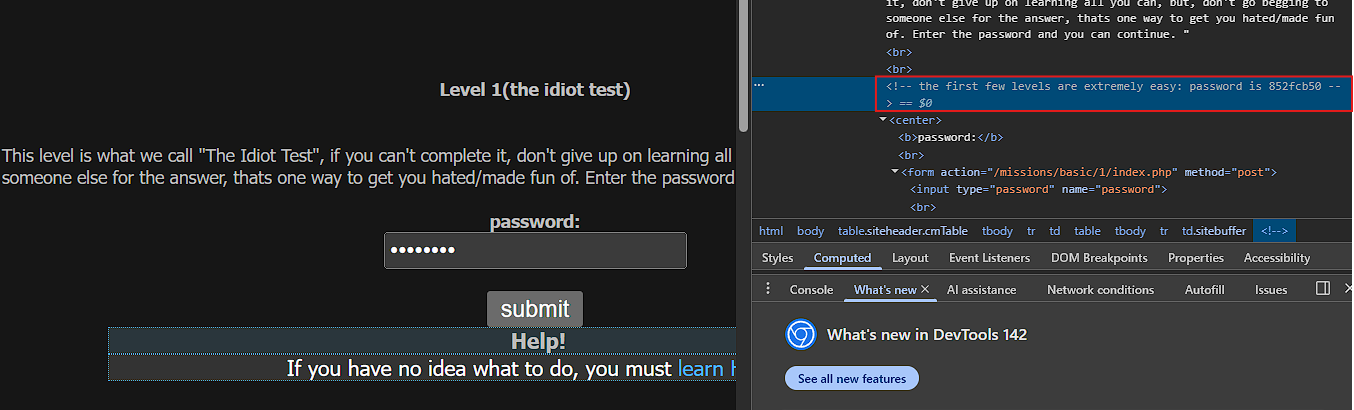
Sometimes, this is done by novice web developers, who may hardcode sensitive information directly into the frontend. This is a serious security mistake and a poor development practice, as it can easily lead to vulnerabilities and data exposure.
Anyway, the password for this challenge is: 852fcb50
Security Recommendations
Never embed credentials is source code or client-side files, instead, store them securely using environment variables or secrets manager. Always perform authentication server-side, hash and salt passwords properly, and integrate secret scanning in your development workflow to catch accidental exposures.
Educating developers on secure coding practices and following OWASP guidelines will further reduce these risks.